Aluminium, Steel or PVC: Which Material Should You Choose for Your Windows and Doors?
Choosing between aluminium, steel and PVC depends on your budget, the desired appearance, thermal performance requirements and the environment in which the windows and doors will be installed.
Each material offers specific advantages. Here are the main differences to help you choose the most suitable option for your windows, doors and exterior joinery.
Why choose aluminium?
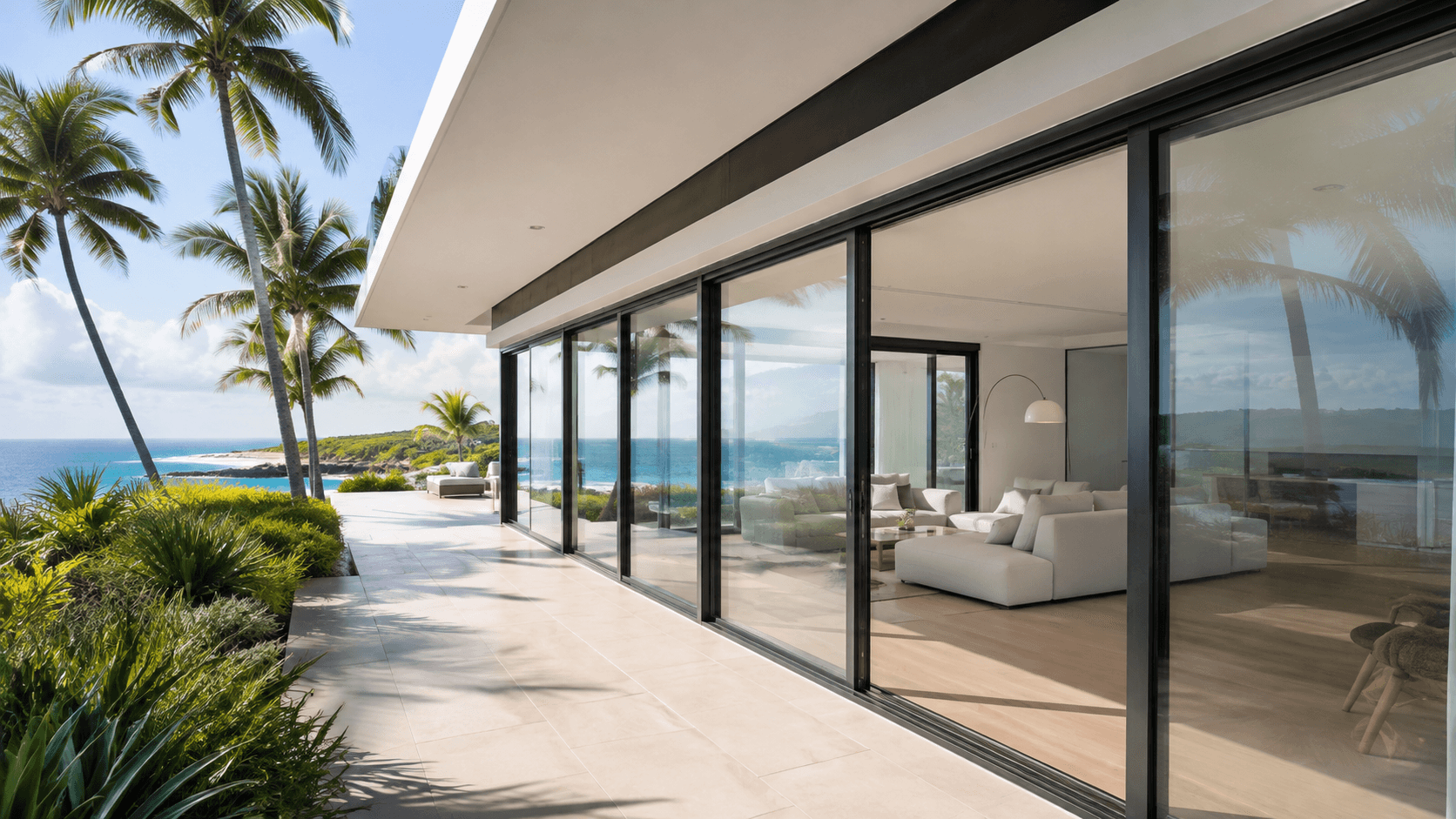
Aluminium is valued for its durability, modern appearance and good resistance to outdoor conditions.
Its main advantages include:
- Excellent resistance to moisture and corrosion;
- Low maintenance;
- Slim and elegant profiles;
- Wide range of colours and finishes;
- Good durability;
- Extensive custom-made manufacturing possibilities.
In coastal areas or locations heavily exposed to salty air, the quality of the surface treatment is particularly important. Specific treatments, including those meeting QUALICOAT SEASIDE requirements, can provide additional protection for powder-coated aluminium.
To improve thermal performance, it is recommended to use thermally broken aluminium profiles combined with suitable glazing.
Source:
CSTB – NF Certification for PVC and thermally broken aluminium windows and window units: https://www.cstb.fr/nos-offres/toutes-nos-offres/certification-nf-fenetres-blocs-baies-pvc-aluminium-rupture-pont-thermique
At LR Construction, we manufacture custom-made aluminium windows and doors, adapting the profiles, glazing, hardware and finishes to the requirements of each project.
Why choose PVC?
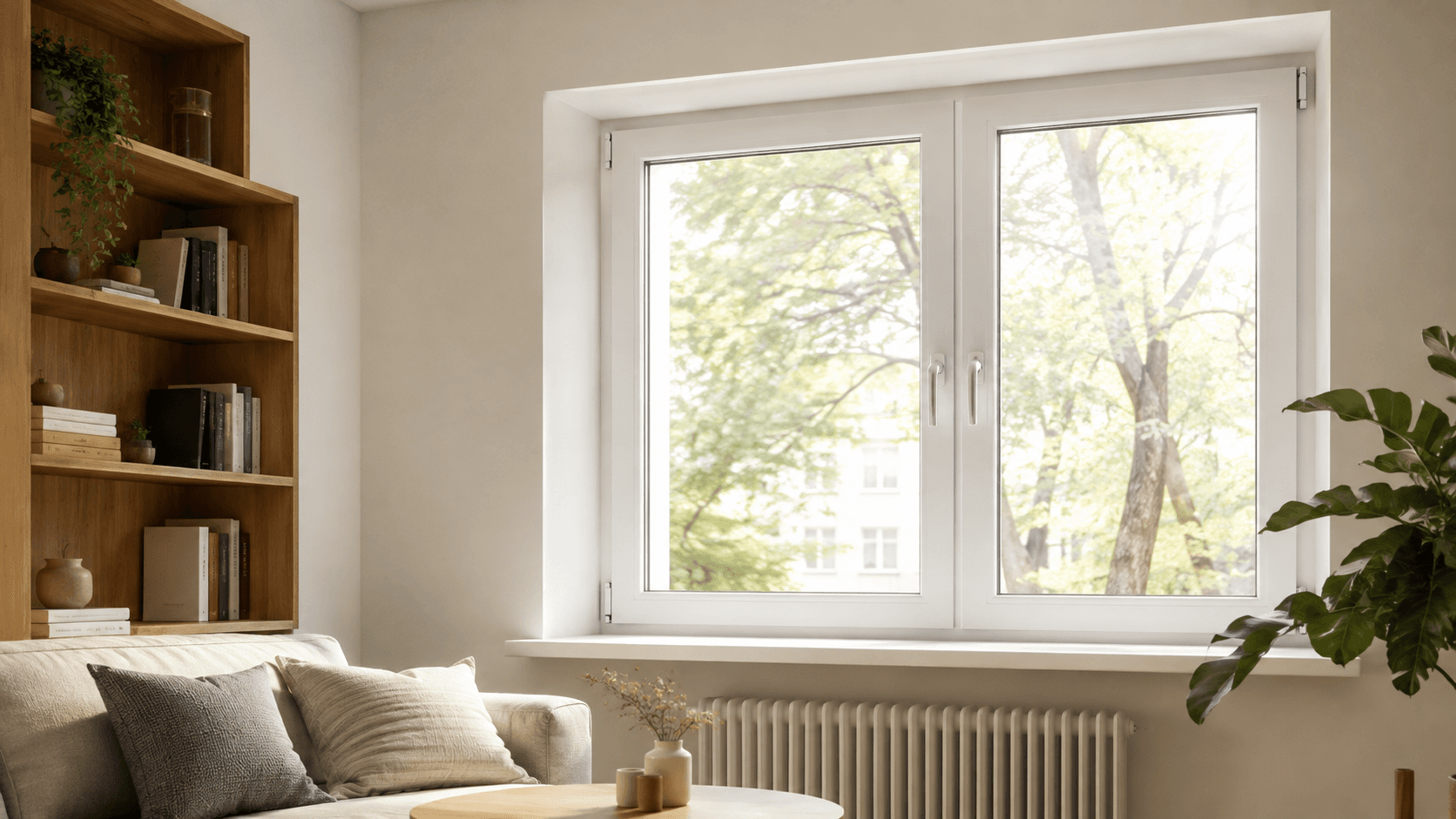
PVC is an economical and high-performing solution, particularly suitable for residential windows and doors.
Its main advantages include:
- Generally affordable pricing;
- Very good thermal insulation;
- Good resistance to moisture;
- No rust;
- Easy maintenance;
- Good durability.
PVC therefore offers excellent value for money, especially for residential and property development projects involving a large number of windows and doors.
Its main disadvantage is mainly aesthetic: PVC profiles are generally thicker than aluminium profiles. For projects requiring slim, contemporary lines, aluminium can therefore provide a more elegant appearance.
Why choose steel?
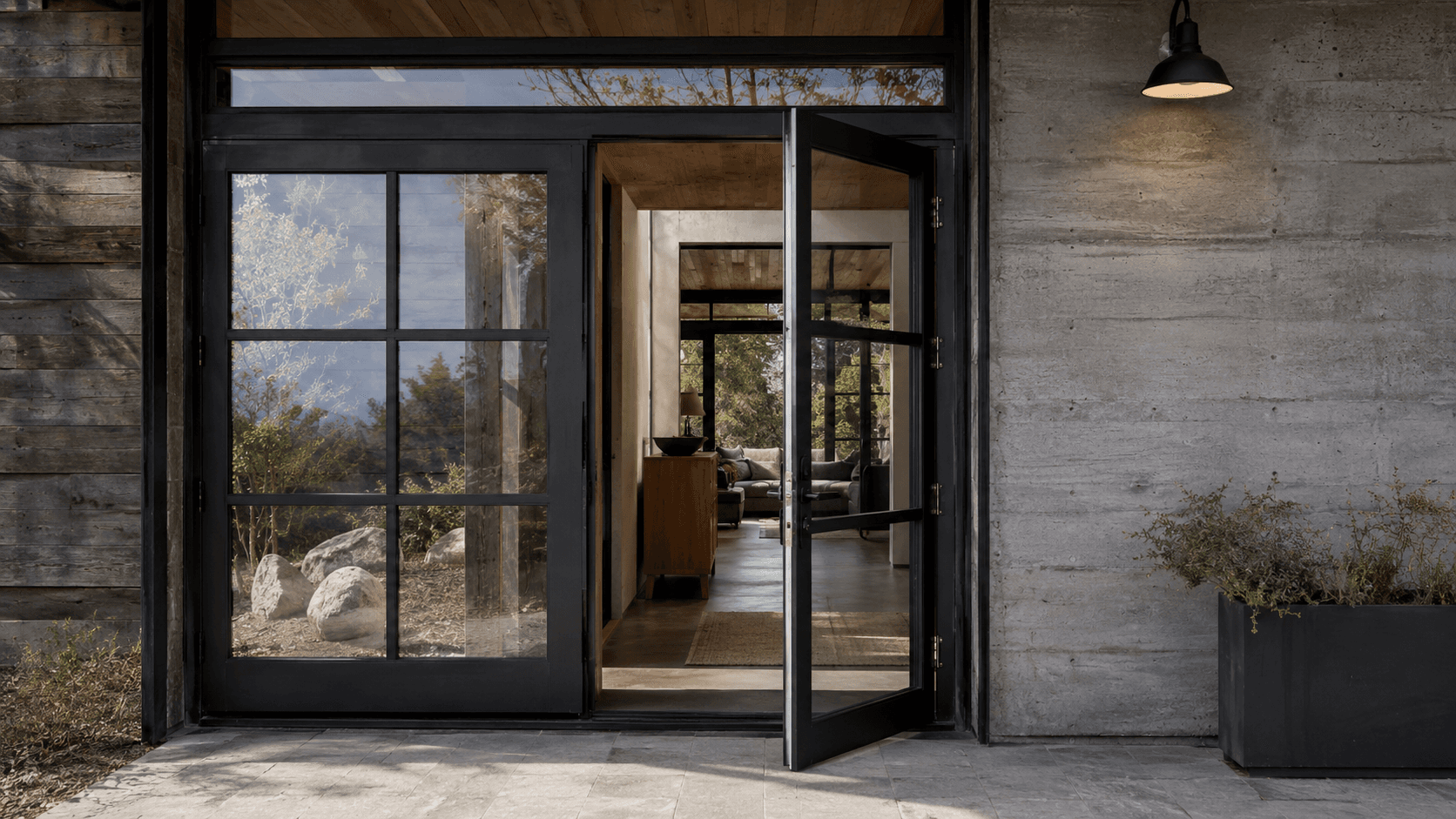
Steel is particularly suitable for projects where strength, rigidity and security are priorities.
It is commonly used for:
- Exterior doors;
- Metal doors;
- Structures requiring high mechanical strength;
- Certain architectural or industrial projects.
Its main point of attention is corrosion.
Proper surface preparation combined with suitable galvanisation and paint systems can significantly improve its durability.
This protection is particularly important in humid or saline environments. Hot-dip galvanising is one of the methods commonly used to protect steel against corrosion.
At LR Construction, we also manufacture custom-made steel doors and steel structures with surface treatments adapted to the conditions of each project.
Aluminium, steel or PVC: how should you choose?
There is no single material that is ideal for every project.
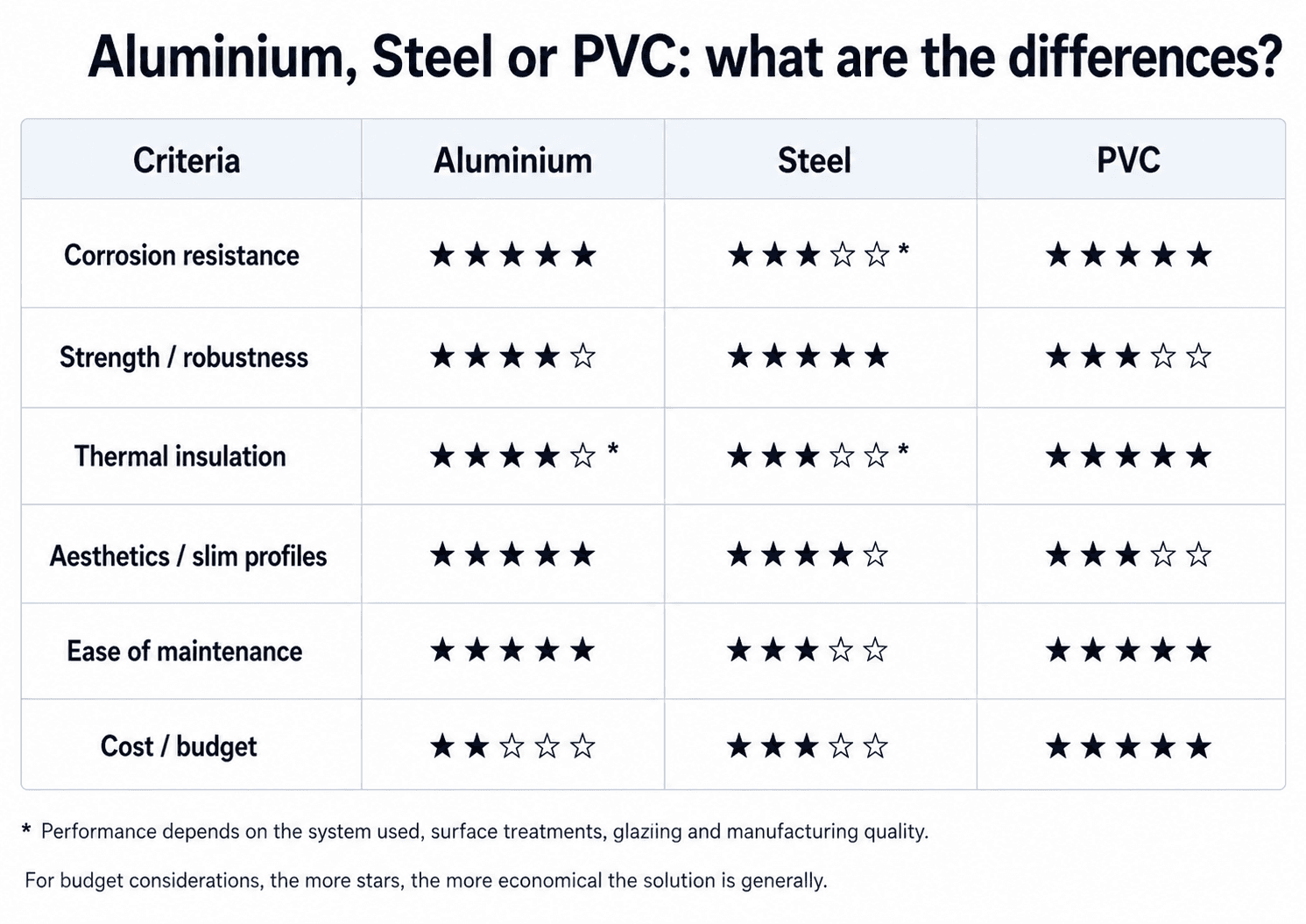
The choice mainly depends on the budget, desired appearance, thermal performance, environmental conditions and type of application.
PVC is particularly attractive when budget and thermal insulation are the main priorities.
Aluminium is better suited to projects requiring a contemporary appearance, slimmer profiles and excellent resistance to outdoor conditions.
Steel is often preferred when strength, rigidity or security are essential.
Which material should you choose in tropical or coastal environments?
In the French overseas territories, tropical regions and coastal areas, windows and doors can be heavily exposed to humidity, UV radiation, rain, strong winds and salty air.
In these environments, both the choice of material and the quality of the surface treatments and accessories are essential.
Aluminium is particularly suitable for humid environments because of its good corrosion resistance. In coastal locations, however, it is recommended to select powder coating and surface preparation suitable for saline exposure.
PVC does not rust and also performs well in humid conditions. However, in regions with intense sunlight, it is important to choose profiles and finishes designed for long-term UV resistance.
Steel can also be used in these environments, provided that an appropriate anti-corrosion protection system is applied. The quality of the galvanising and paint system plays an essential role in its long-term durability.
Do not overlook the hardware
The quality of a window or door does not depend only on the profile.
It is also important to check:
- seals and gaskets;
- hardware;
- screws and fixings;
- glazing;
- drainage systems;
- overall weather tightness.
For projects located in Martinique, Guadeloupe, French Guiana, Réunion or Mayotte, these components should be selected according to the building’s actual level of exposure.
Aluminium, steel or PVC: what should you remember?
PVC: economical, insulating and easy to maintain. It is an attractive option when budget is a key consideration.
Steel: extremely robust and particularly suitable for applications requiring strength and security. High-quality anti-corrosion protection is essential.
Aluminium: durable, aesthetically attractive and resistant to outdoor conditions. It generally allows for slimmer profiles and a more contemporary appearance.
At LR Construction, we manufacture custom-made aluminium, steel and PVC windows and doors for residential, property development, commercial and hospitality projects.
The choice of material, glazing, profiles and finishes is made according to the budget, environmental conditions, desired appearance and technical requirements of the project.
FAQ
Which material is the most economical?
PVC is generally the most economical option. The cost of steel and aluminium then varies depending on dimensions, systems, glazing and finishes.
Which material offers the best corrosion resistance?
PVC does not rust, while aluminium also offers excellent corrosion resistance.Steel, on the other hand, requires suitable anti-corrosion protection.
Aluminium or PVC: which provides better insulation?
PVC naturally provides very good thermal insulation.
Aluminium can also achieve excellent thermal performance when thermally broken profiles are combined with high-performance glazing.
Aluminium or PVC: which looks better?
This depends on the architectural style of the project.
Aluminium generally allows for slimmer profiles and a more contemporary appearance, while PVC profiles can appear visually thicker.
Can steel windows and doors rust?
Yes, if they are not adequately protected.
Proper surface preparation, galvanisation and a suitable paint system can significantly reduce the risk of corrosion over time.
Which material should you choose near the sea?
Aluminium and PVC are particularly suitable because of their good resistance to moisture.
For aluminium, the surface treatment should be suitable for marine exposure. For steel, reinforced anti-corrosion protection is recommended.